Driver shortage pushes bus depots toward automation
Europe’s public transport operators are entering a period where staffing pressure and fleet electrification meet in the same place: the bus depot. Around 105,000 bus and coach driver positions remain unfilled across Europe (IRU figures cited in sector analyses), and a meaningful slice of working time is still spent on low-speed, non-revenue movements inside the […]

Europe’s public transport operators are entering a period where staffing pressure and fleet electrification meet in the same place: the bus depot. Around 105,000 bus and coach driver positions remain unfilled across Europe (IRU figures cited in sector analyses), and a meaningful slice of working time is still spent on low-speed, non-revenue movements inside the fence.
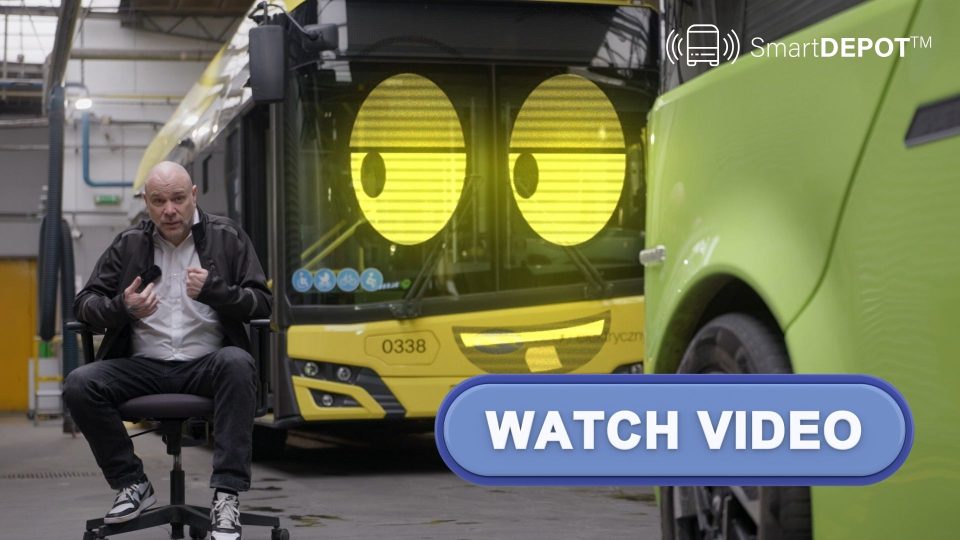
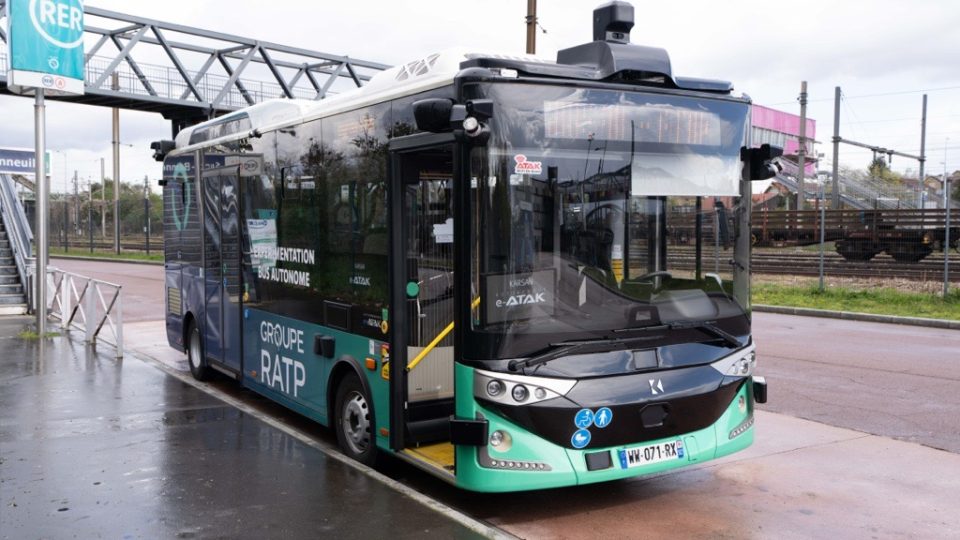
Watch the video below to see smartbus – the driver’s friend in the depot.
It’s 23:17 at the depot
The last bus rolls through the gate. Before the driver can go home, there is the end-of-day routine: park the bus, connect the charger, fill in the defect report on the tablet. Minor scratch on the left rear panel from the tight turn at the terminal – noted. Windscreen wiper intermittent – flagged for the morning technician. The charging indicator blinks green. Done. Except it isn’t quite done.
The depot manager calls over. The bus is blocking the wash lane. It needs to move before the cleaning crew can get to the vehicles behind it. And the vehicle at bay 14 – the one with the wiper fault – needs to be at the workshop entrance before the maintenance team arrives at 06:00, which means someone has to reposition it tonight. While they’re at it, the charging rotation needs to run: three buses on the slow chargers need to swap onto the fast units so they’re ready for the early departures.
By the time the driver walks out, it is closer to midnight. The shift started at 11:00 that morning. This is the daily maintenance cycle at most large bus depots in Europe – the post-service sequence of checks, positioning, charging, and preparation that has to happen before the next day can begin. Some operators employ dedicated shunting staff to take over from drivers at the gate. In many depots, the people moving buses at midnight are the same people who drove routes all day.
By 04:30, every charged and checked bus needs to be staged in departure order – ready for the drivers arriving at 05:00, who expect their vehicle to be where it should be. The cycle starts again.
The depot bottleneck
Depot work is a high-frequency, low-speed environment: tight spaces, mixed pedestrian and vehicle traffic, and a lot of reversing. Operational studies referenced in the Smart Depot 2026 analysis describe 3-4 minor collisions per week in large manually operated depots and identify reversing manoeuvres as a common factor.
Full Smart Depot 2026 report (download): Respond to driver shortage – Smart Depot 2026 Report
Time adds up the same way. Operational assessments referenced in the report show manual depot movements typically consume 10 to 35 minutes per vehicle per day, depending on depot layout and shift organisation.
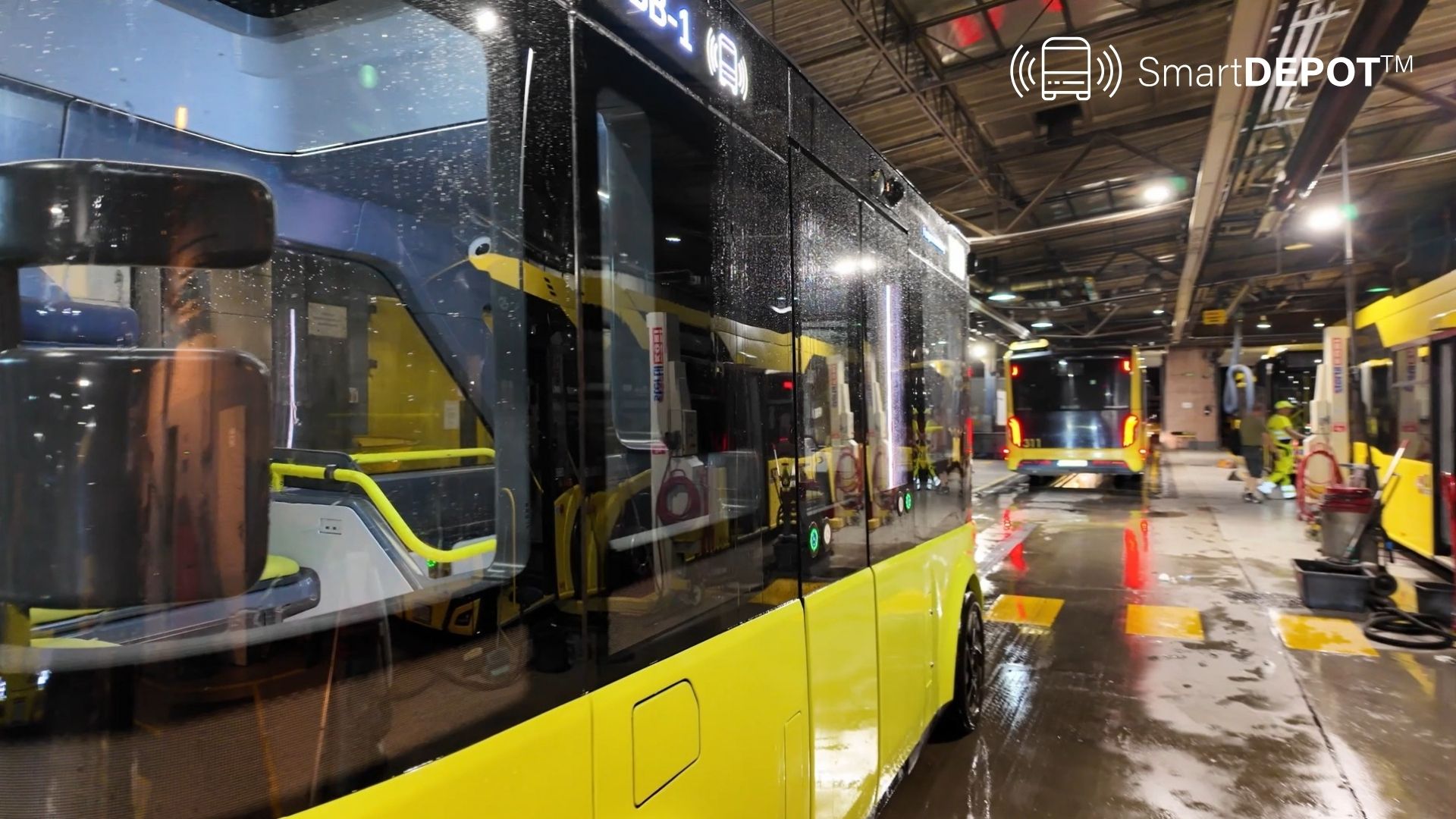
For an operator running a 100-bus depot, even the mid-range scenario translates into dozens of staff-hours spent on activities that do not carry passengers: parking, charging approach, repositioning for wash, and workshop staging.
Why electric fleets make depot coordination harder
Electric bus operations shift the depot into a sequence of charging-dependent decisions. Vehicles park near the right charger, connect in the right order, charge under tariff and grid constraints, and get repositioned to match morning departure priorities. When fleets grow faster than charging capacity, depots run physical rotations between parking, wash positions, and charging bays – each rotation requiring a qualified person in the loop unless the movement is automated.
This is one reason “smart depot” discussions are increasingly linked to electrification programmes: charging and depot movements become one planning problem.

What a smart depot consists of
A smart depot combines three integrated capabilities:
- Depot management systems (DMS): a real-time view of vehicle location, status, charge level, maintenance needs, and schedule – fed by timetabling, charger management, and workshop systems.
- Smart charging: algorithmic prioritisation so vehicles with early or high-demand duties get the right charging power at the right time, aligned to tariffs and grid peaks.
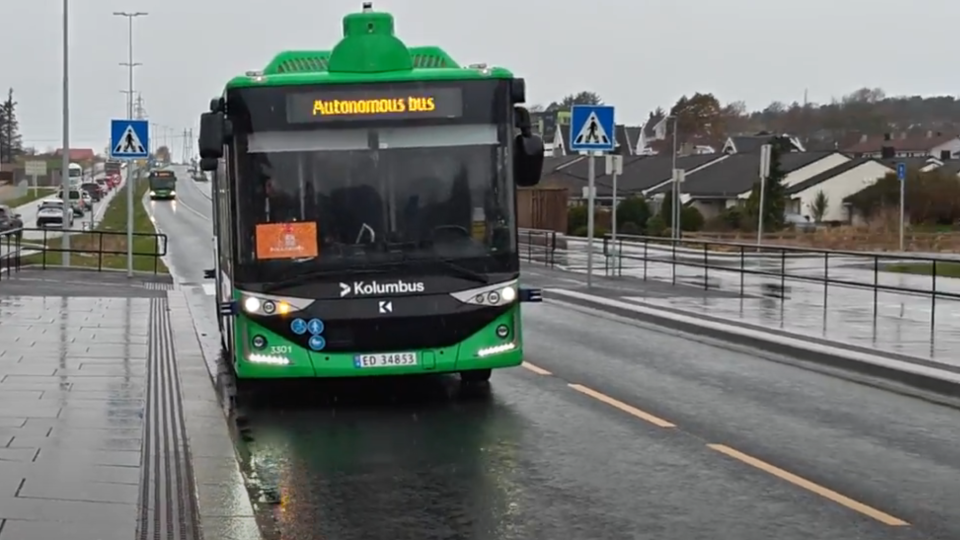
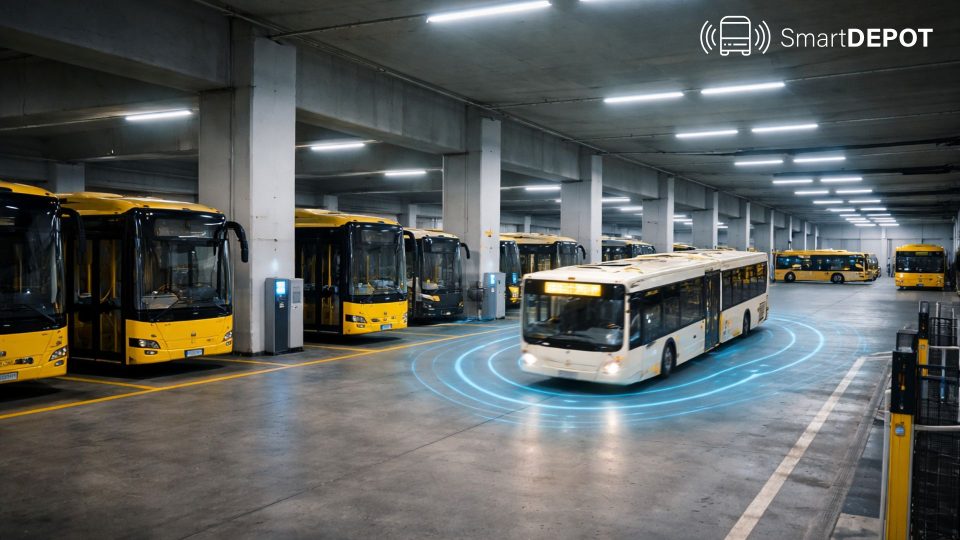
- Autonomous depot movements (smartbuses): low-speed, mapped, supervised movements inside a controlled Operational Design Domain (ODD), with autonomous mode inactive outside the depot.
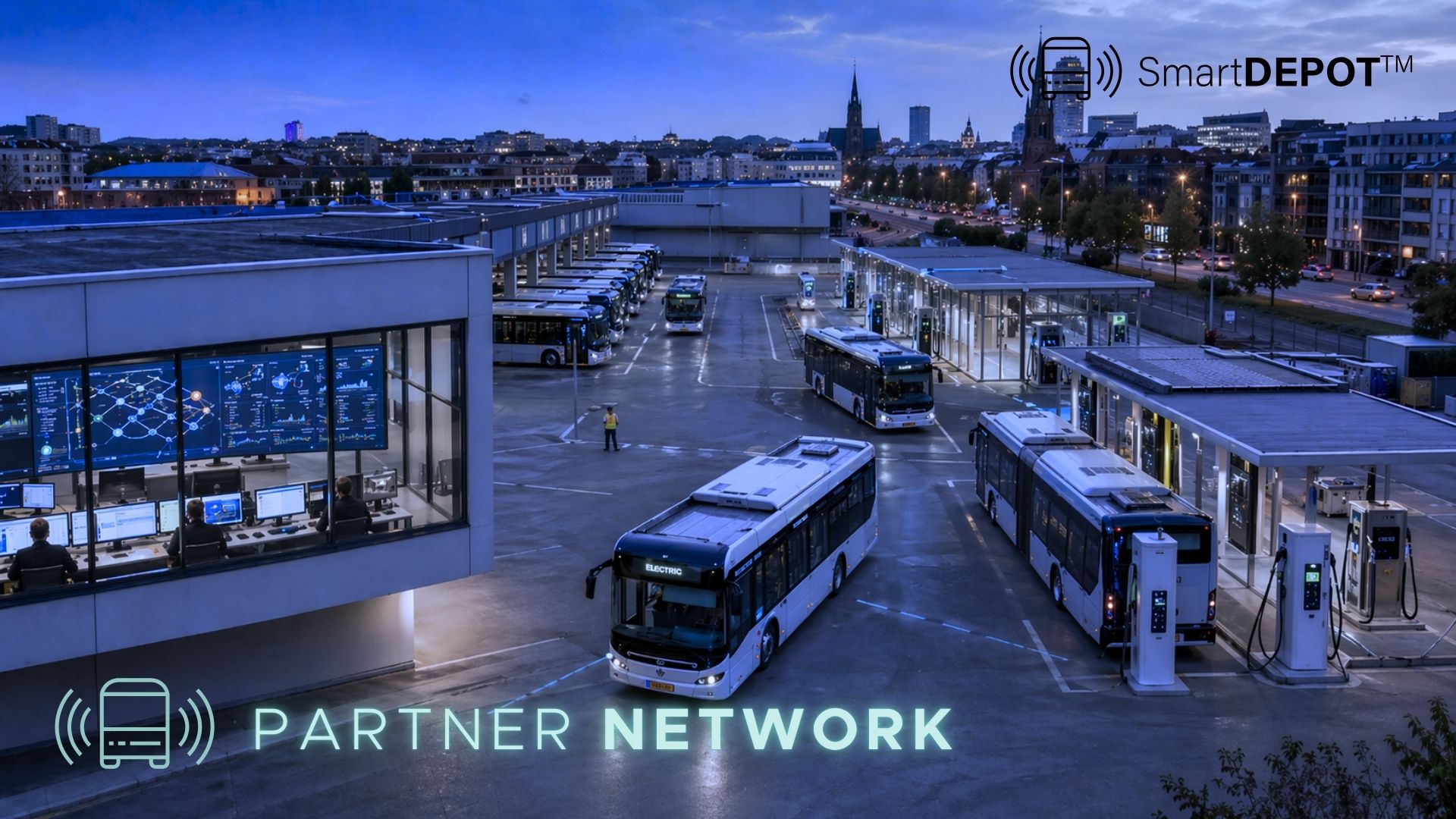
Smart depots are where autonomous public transport becomes real. They enable safe, operational deployments that improve efficiency and safety while helping operators scale as driver constraints increase. As smartbus fleets grow, depots become the integration centre – bringing OEMs, depot systems, charging, telematics, and scheduling together to build the depot of the future. To make that integration practical at industry scale, SmartDEPOT™ Partner Network brings city bus manufacturers and depot management software providers into a collaboration program focused on making depots and daily operations more efficient.
Learn more: SmartDEPOT™ Partner Network
The business case for operators
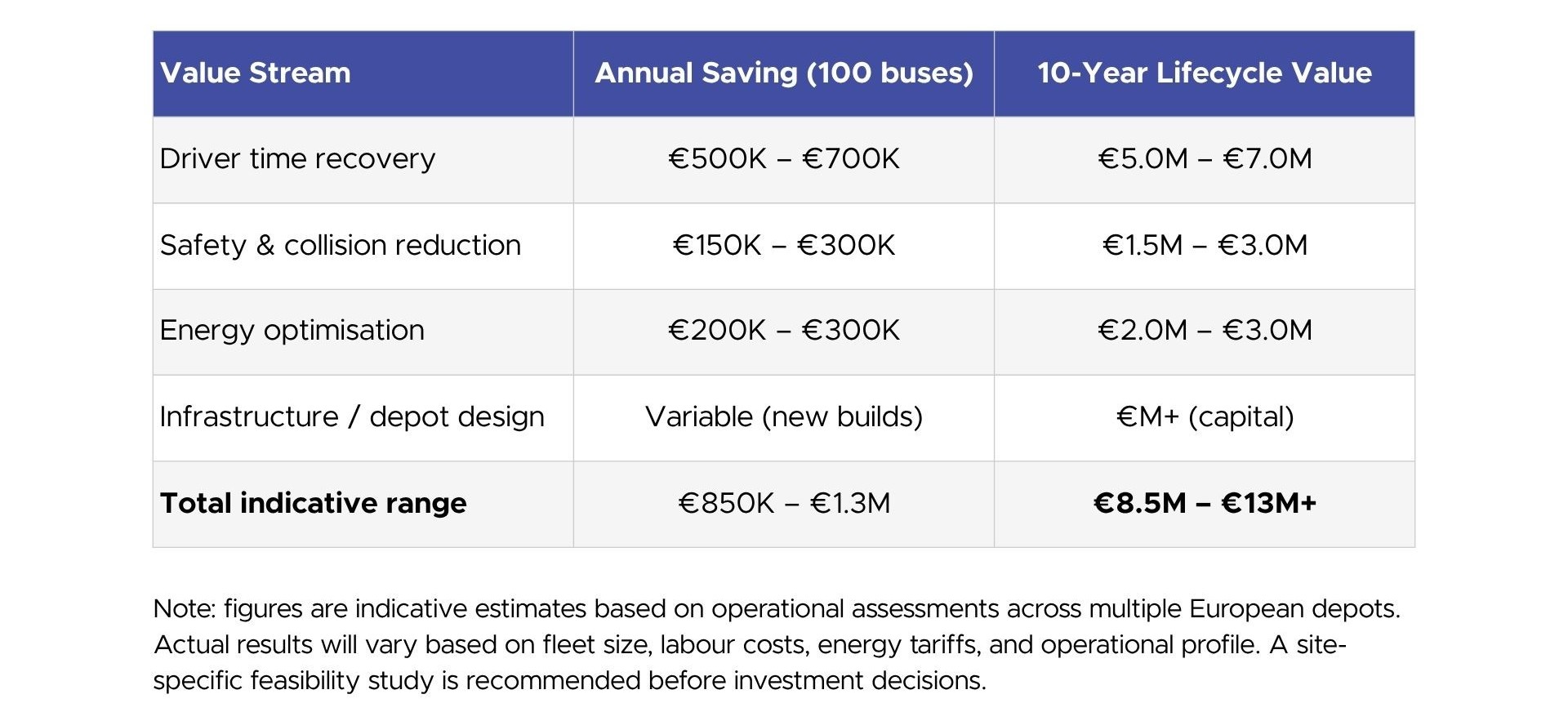
The quantified value streams typically include:
- Driver time recovery: converting depot manoeuvre time into service capacity or reducing overtime pressure.
- Collision cost reduction: lowering repair costs and downtime from repeated low-speed yard incidents.
- Energy optimisation: shifting charging into lower-tariff windows and smoothing demand peaks.
- Infrastructure utilisation: better charger allocation and space efficiency in constrained urban depots.
Taken together, these four value streams translate into a measurable business case at depot scale. The indicative ranges below summarise annual and 10-year value for a 100-bus operation, based on multi-site operational assessments. For methodology and assumptions, see Smart Depot 2026 report.
Driver shortage driving smart depots?
Driver shortage pushes bus depots toward automation because driver scarcity increases the value of every recovered minute, and electrification turns depot work into a coordinated scheduling task.
For many PTOs, the next inflection point is procurement: specifying smartbus-ready depot autonomy in the next fleet tender avoids retrofit complexity and shortens the path to deployment.
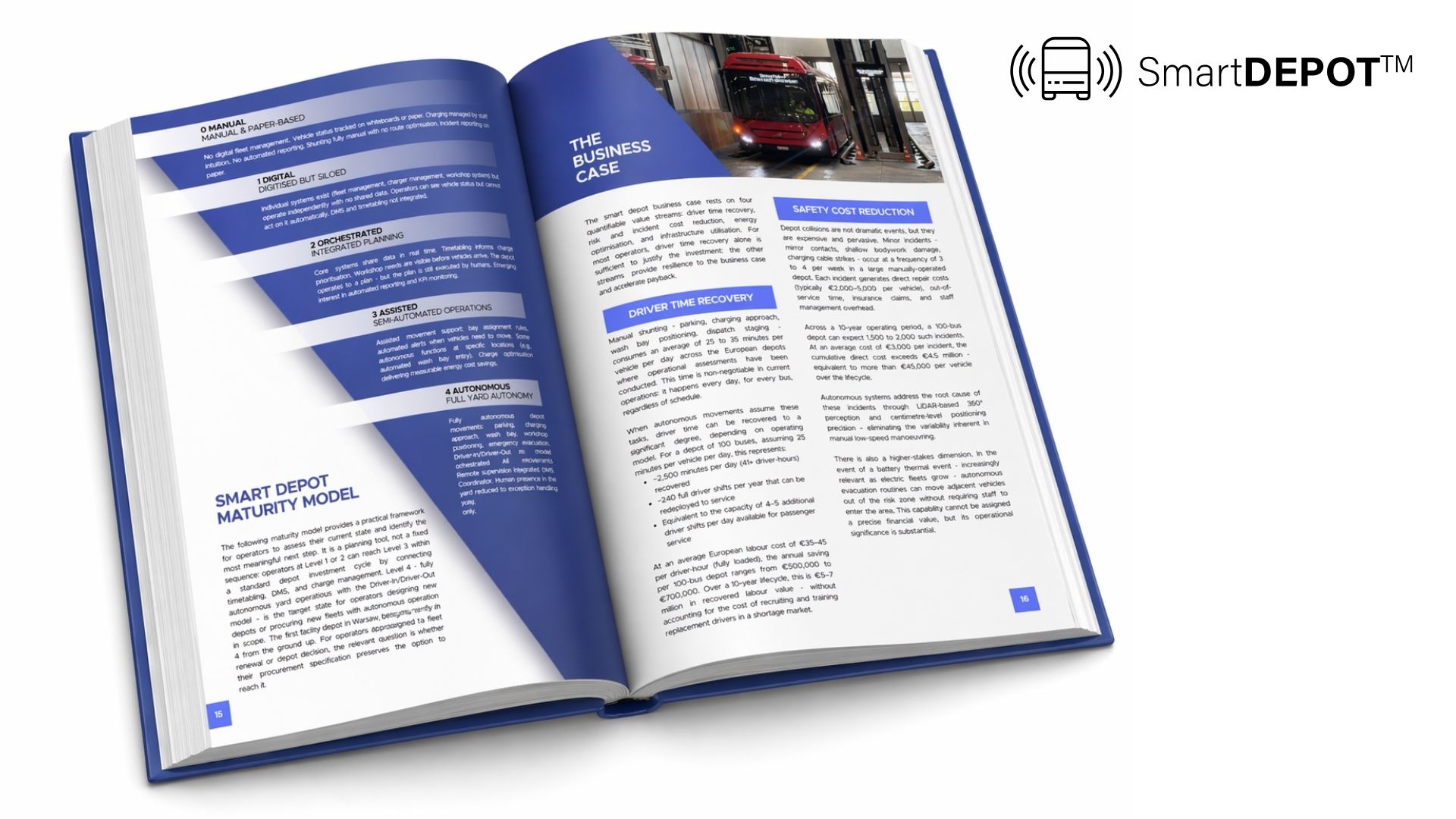
Full Smart Depot 2026 report (download): Respond to driver shortage – Smart Depot 2026 Report