Rimini’s full electric BRT line is now live. The launch of the Metromare
by Stefano Alfanopictures by Roberto Renzi 82 years after the inauguration of trolleybus line 11, which connects Rimini to Riccione via the coast, another trolleybus line was inaugurated yesterday. It is the Rapid Coastal Transport (TRC), known as Metromare, which connects Rimini Station and Riccione Station entirely in reserved lanes. Actually, the Metromare had been […]
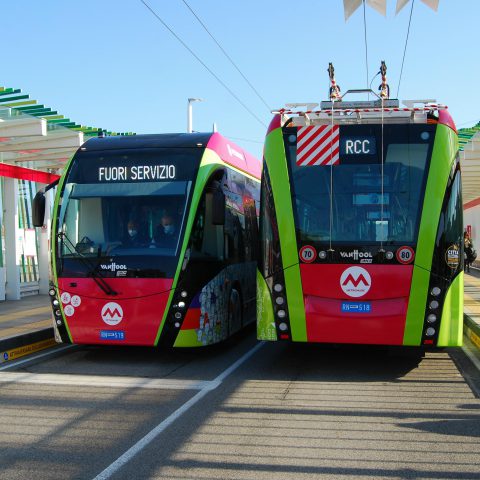
by Stefano Alfano
pictures by Roberto Renzi
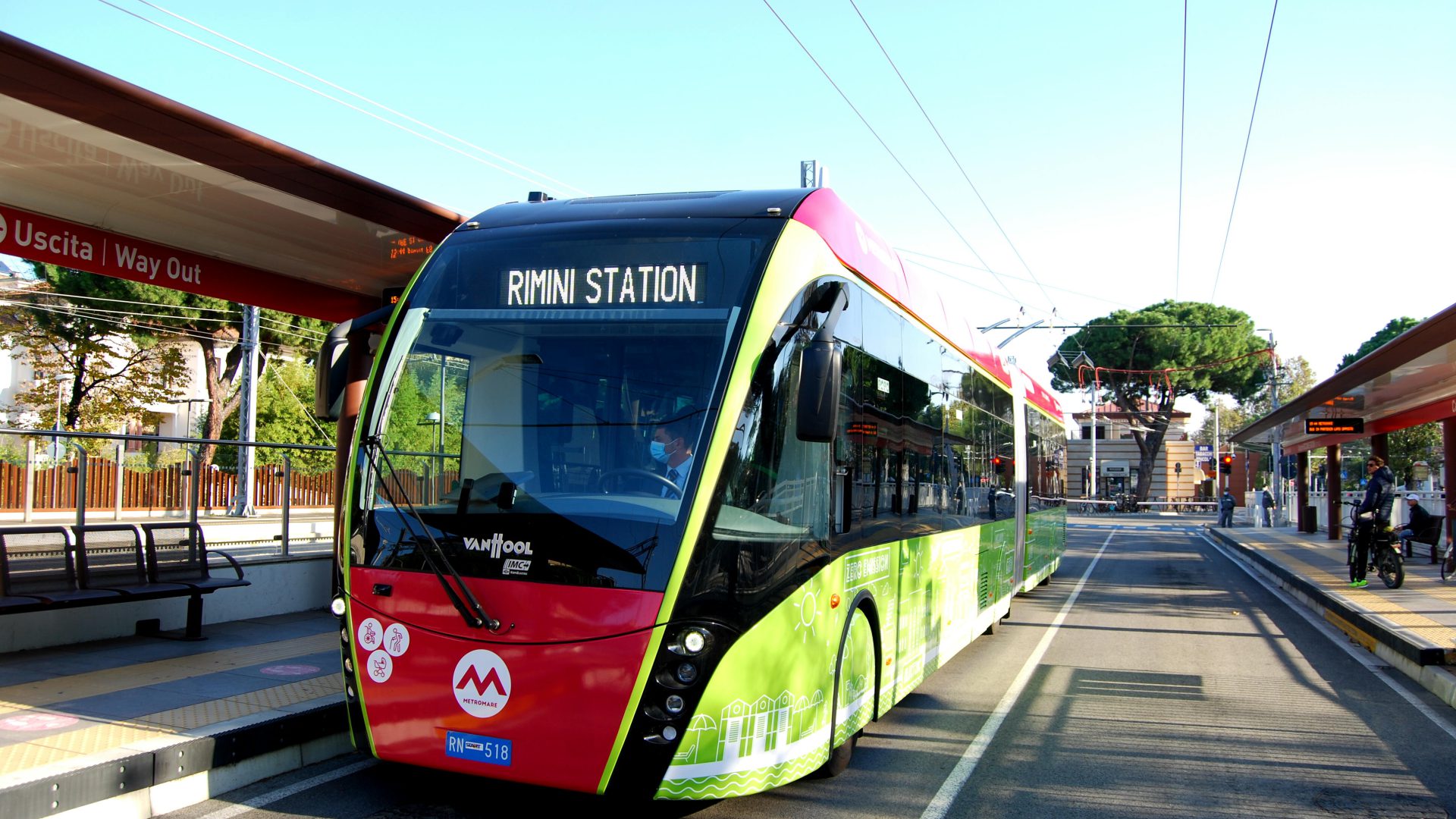
82 years after the inauguration of trolleybus line 11, which connects Rimini to Riccione via the coast, another trolleybus line was inaugurated yesterday. It is the Rapid Coastal Transport (TRC), known as Metromare, which connects Rimini Station and Riccione Station entirely in reserved lanes. Actually, the Metromare had been inaugurated on 23 November 2019… but without the trolleybuses. In fact, the vehicles were not then available. Van Hool trolleybuses have been tested during this summer.
The launch event also coincides with the 100th anniversary of the first electric-powered vehicles introduced in Rimini. On 1 July 1921 the first section of the Rimini – Riccione tramway began service, linking the centre of Rimini to the Ospizi Marini (today’s Piazza Tripoli); the tramway line was completed in June 1927, when the tourist development of the Riviera called for an expansion of the service, and the trolleybus was chosen as the ideal vehicle for comfortable and fast transport. Today it is the turn of the Metromare, which integrates with the service provided by line 11.
The perception of users has been positive in almost two years of operation. The service timetable, initially planned from 7 a.m. to 9 p.m., was then extended to midnight during the summer months. In the summer of 2021 alone, the Metromare carried 220,000 passengers.
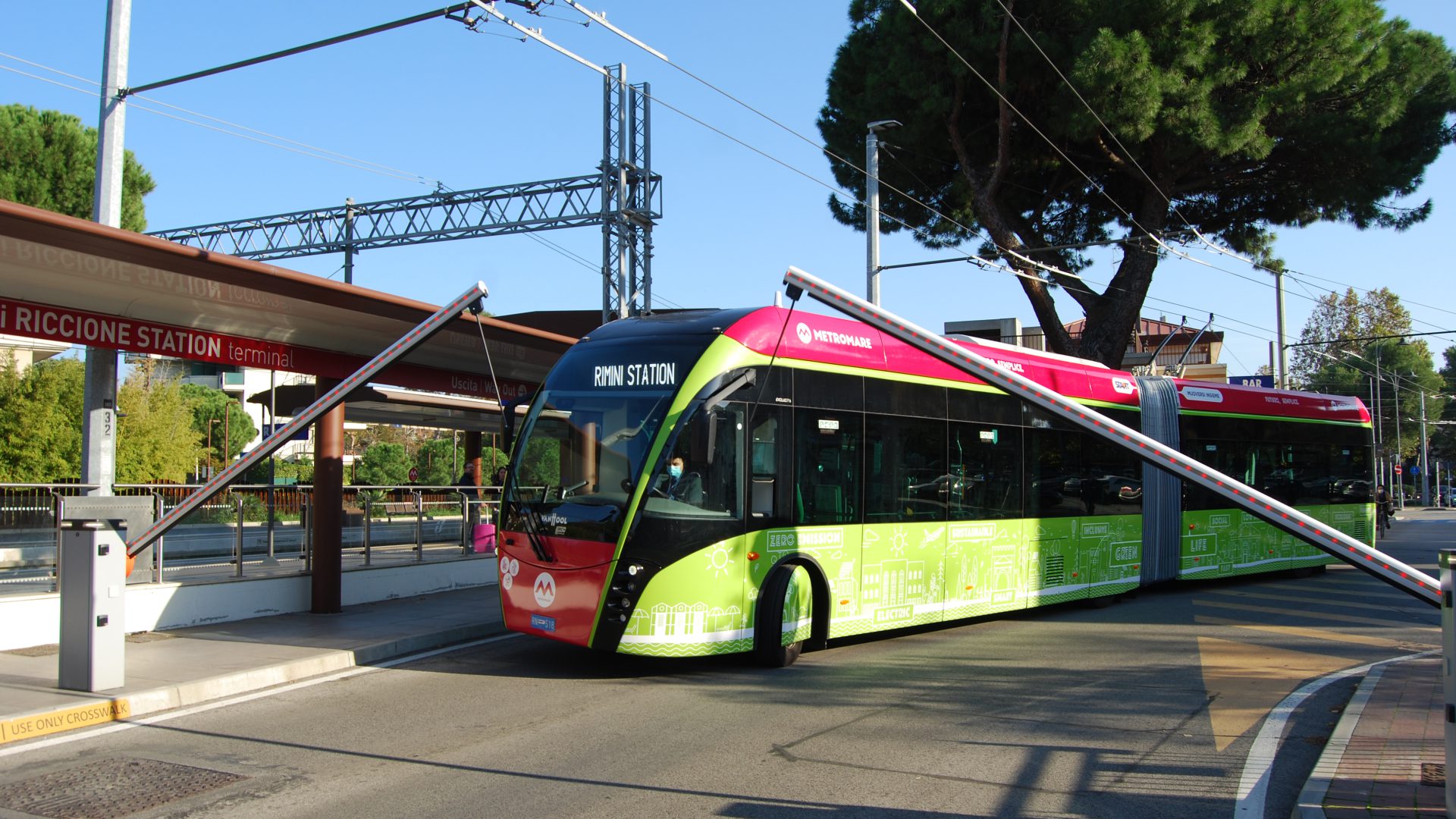
Van Hool Exquicity trolleybuses for Rimini
Today the 9 trolleybuses commissioned to Van Hool are available and tested. They are the Exqui.city model produced by Van Hool for the bodywork and interior and by Kiepe Electric for the electrical part. These 18.50 m vehicles are equipped with two motors and IMC technology (49 kWh lithium titanate battery packs instead of a motor-generator), which allows transfers from the depot to the line in full electric mode operation. There are 37 seats and room for a total of 150 passengers, and there are also two places for wheelchairs and spaces for users with bicycles. The driver’s cabin is isolated from the passenger environment.
The service started yesterday morning at 5.26 a.m. from Riccione and at 5.30 a.m. from Rimini. The service runs every 30 minutes until 7 a.m., then every 15 minutes until 9 p.m., after 9 p.m. it runs again every 30 minutes until midnight, with last departure from Rimini Station at midnight and from Riccione Station at 0.24 a.m. The holiday service is practically identical, with the only variation being every 30 minutes until 8.00 am.
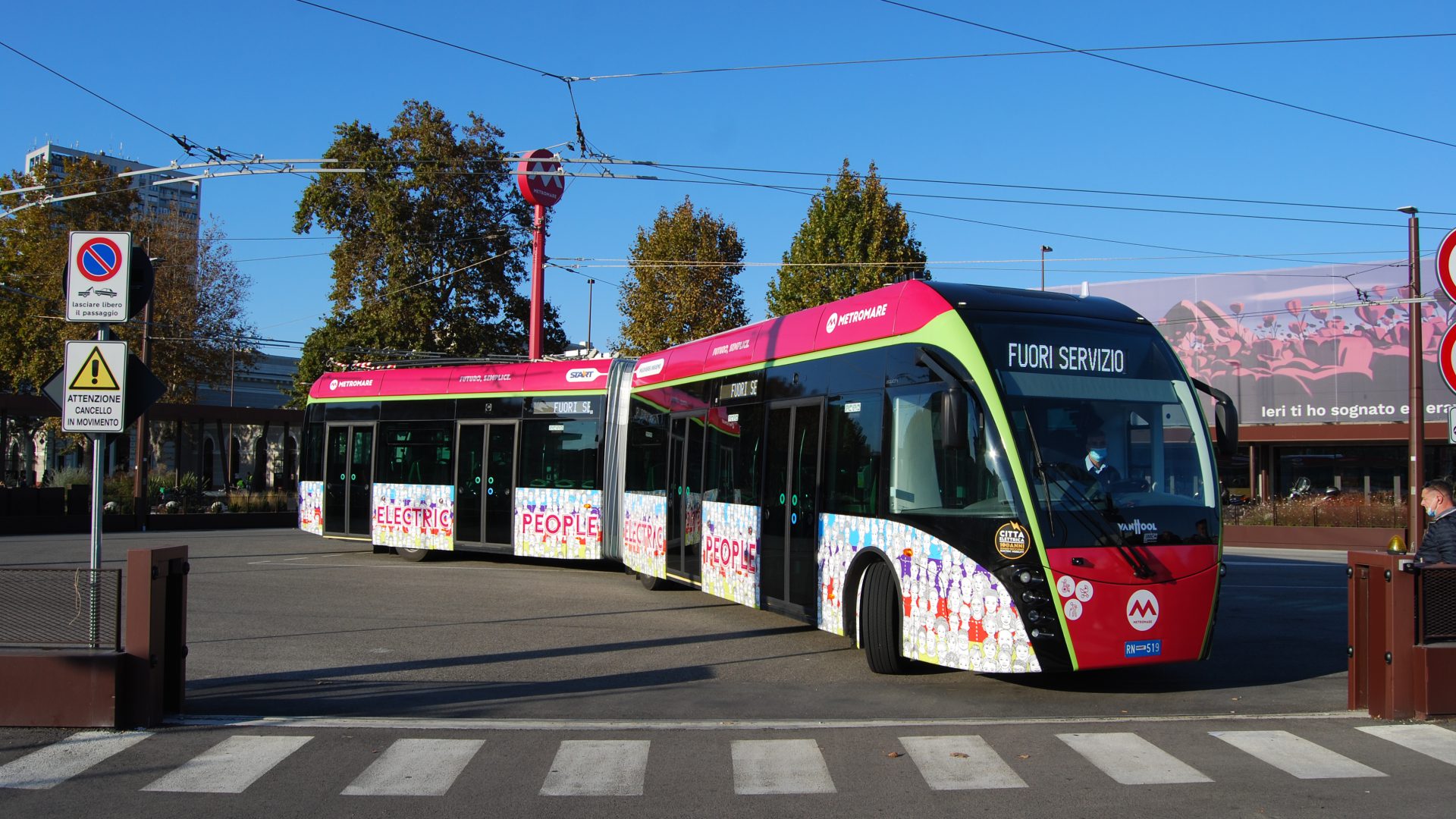
Ribbon-cutting ceremony of the Metromare
The ribbon cutting ceremony took place yesterday at 3 pm. The inaugural journey from Rimini to Riccione took place in the presence of the authorities; the 9.767 km route was covered in 23 minutes.
Present on the first trip were the Regional Mobility Councillor Andrea Corsini, the President of the Province of Rimini, Riziero Santi, the new Mayor of Rimini Jamil Sadegholvaad and the President of PMR, Patrimonio mobilità Rimini, Stefano Giannini.
The Metromare is not limited to the section currently in operation. The extension of the line from Rimini Station to the Exhibition Centre, and then on to Santarcangelo di Romagna, which would become the centre of interchange with mobility from the Valmarecchia, has been financed with 49 million euro. The intention is that the Metromare will also be extended southwards, towards Misano and Cattolica.
“The ecological transition in Rimini is really happening,” said Councillor Corsini.